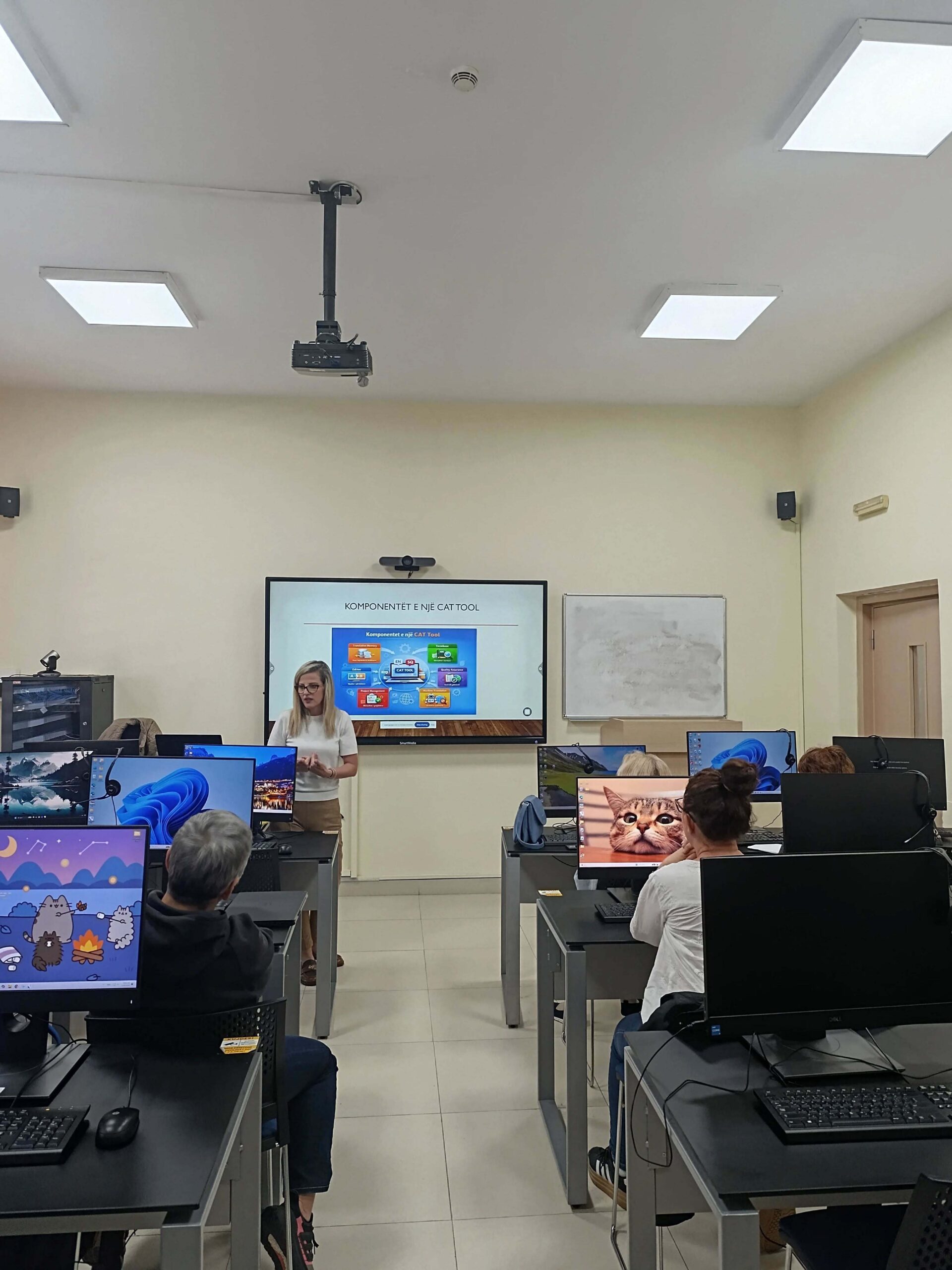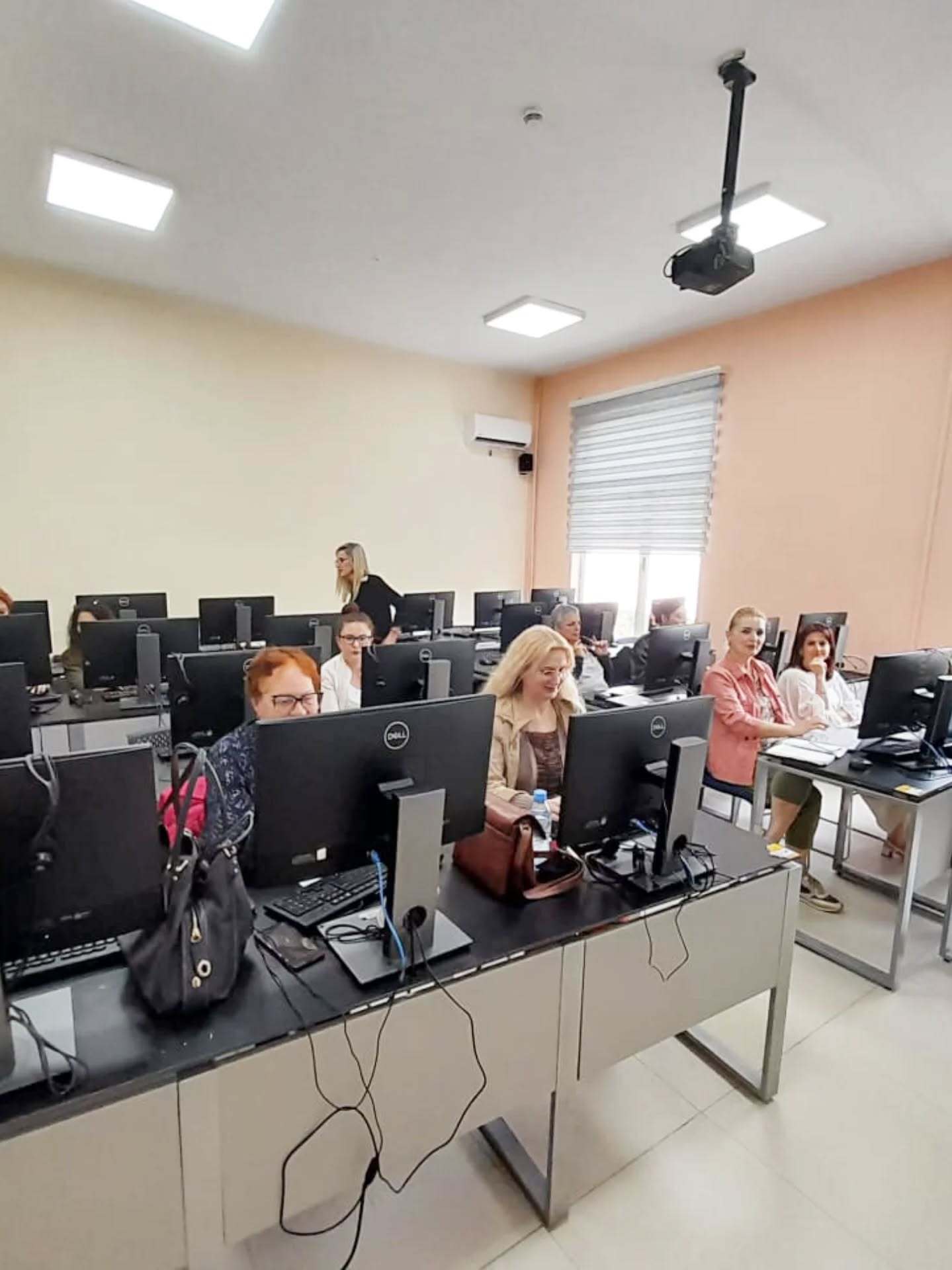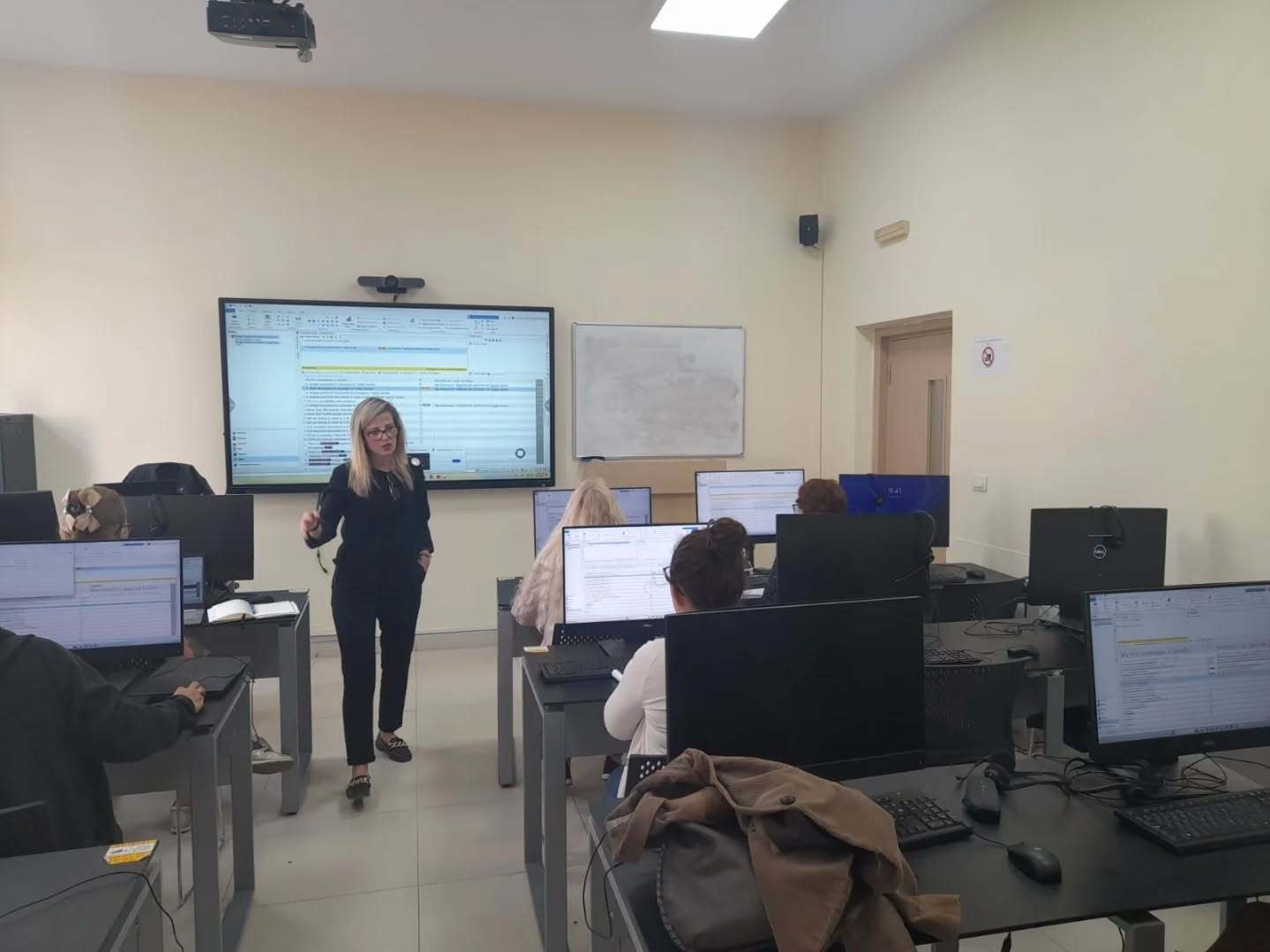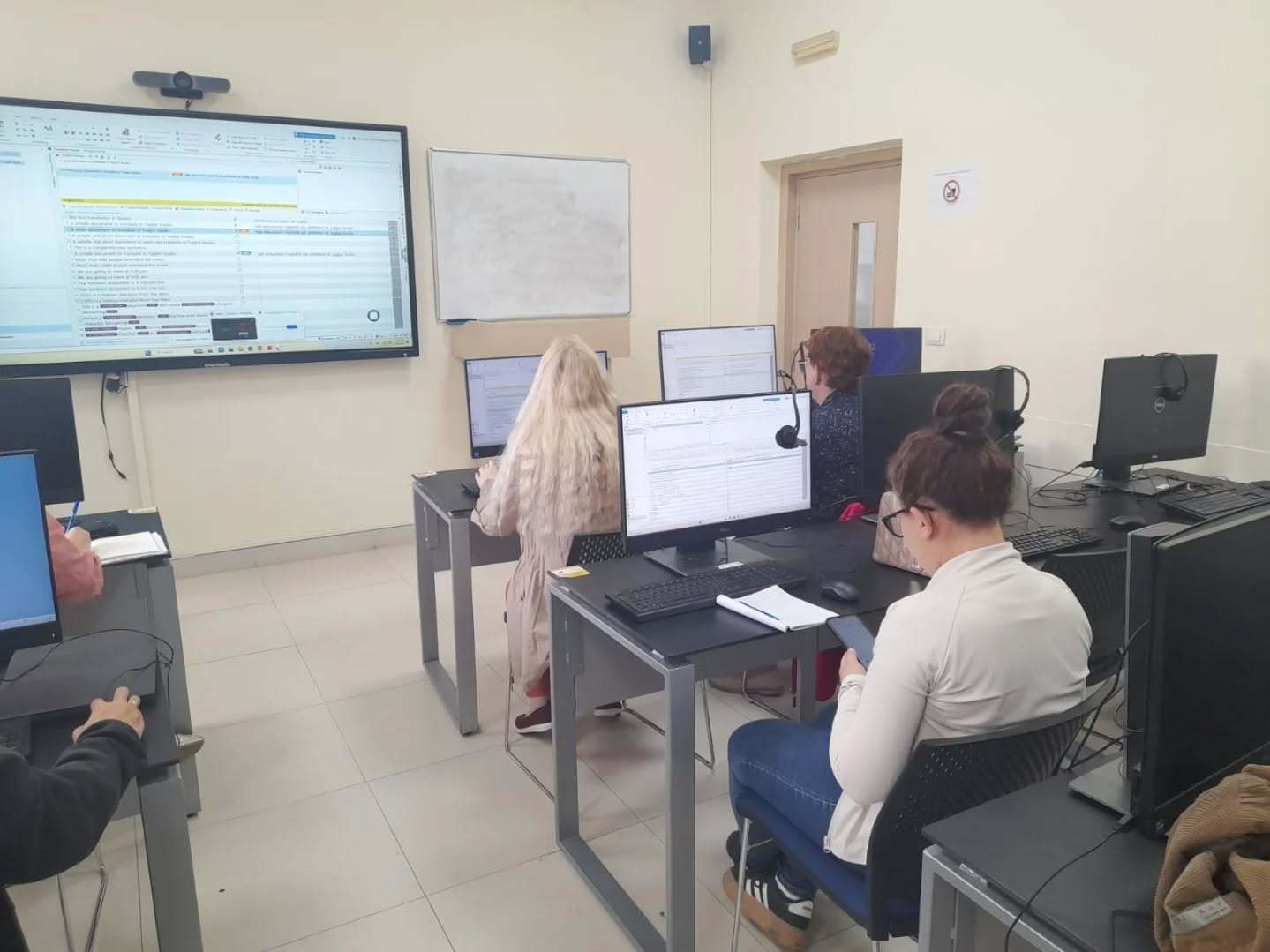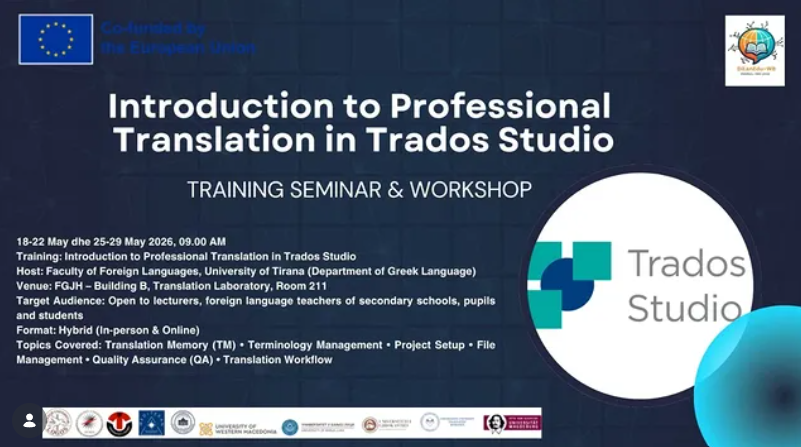
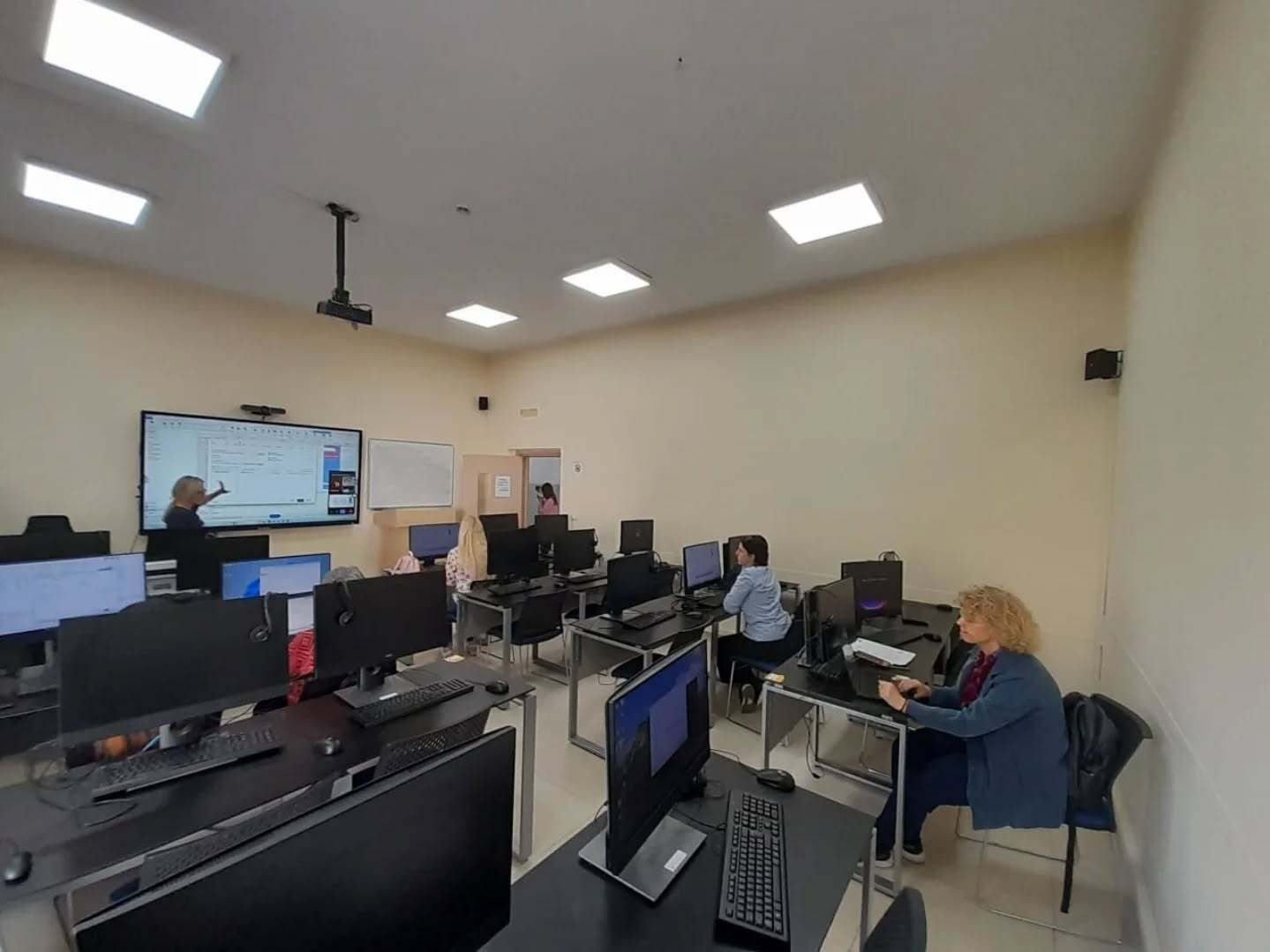
The University of Tirana, Faculty of Foreign Languages, Department of Greek Language, successfully organised two micro-credential training programmes entitled “Introduction to Professional Translation in Trados Studio (TRADOS I)” and “eLearning – Efficiently Manage Translation Projects with Trados (TRADOS II)” within the framework of the Erasmus+ Capacity Building in Higher Education (CBHE) project DiLanEdu-WB – Digital Transformation in Language Study and Education of the Western Balkans. The activity was implemented under Work Package 2 – Curriculum Development, contributing to Deliverable D2.3 – Design and Development of Micro-Credential Programmes Focusing on ICT Integration in Language Education.
The training programmes were delivered over two consecutive five-day modules from 18–22 May 2026 and 25–29 May 2026, offering participants an intensive learning experience focused on Computer-Assisted Translation (CAT) technologies and digital translation workflows. The programmes were designed to strengthen digital competences in language education and professional translation by combining theoretical instruction with extensive hands-on laboratory practice using SDL Trados Studio.
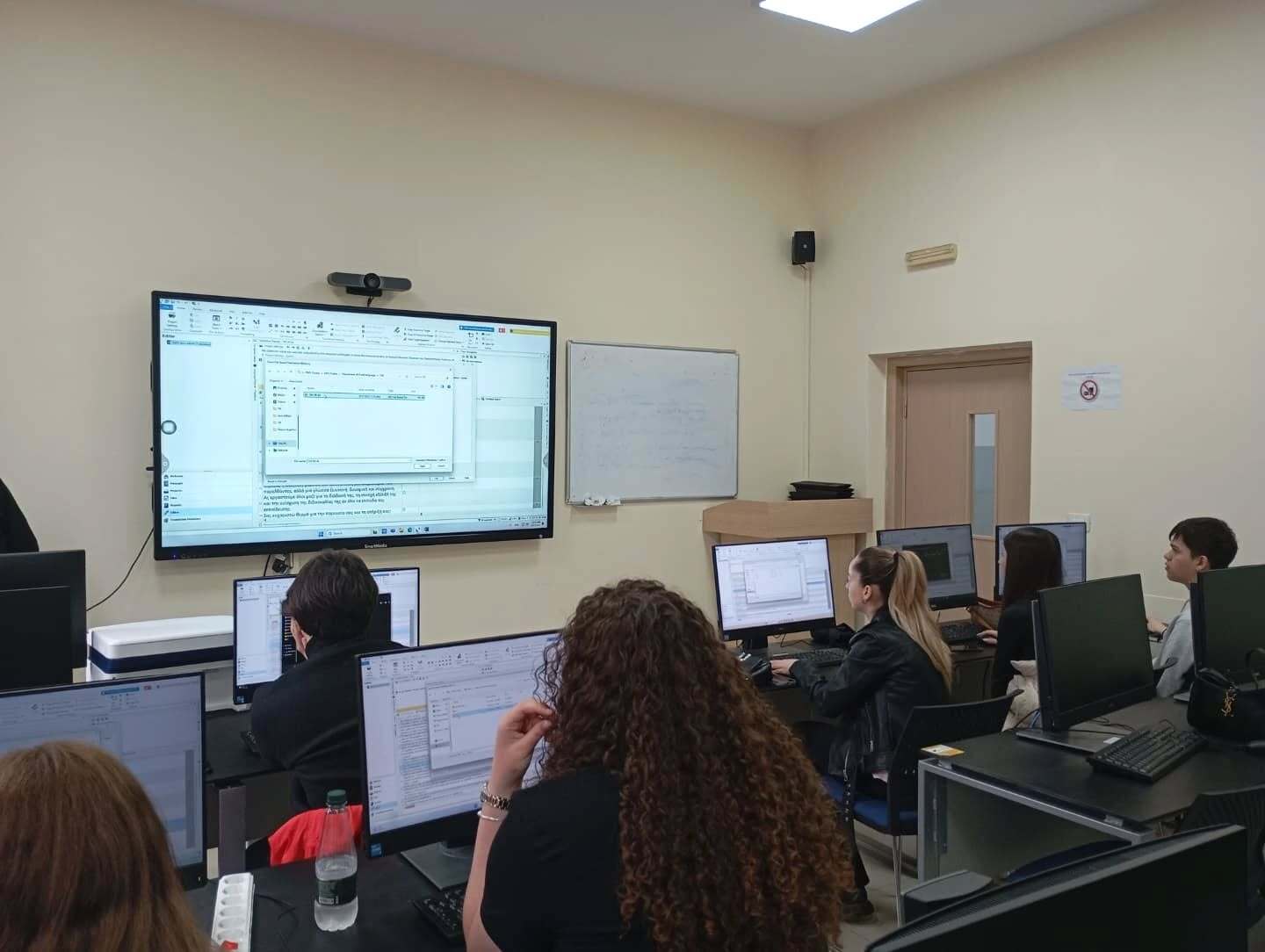
Throughout the training, participants acquired practical skills in translation memory management, terminology management, project creation, document processing, quality assurance, machine translation, post-editing, and professional translation project management. Practical exercises based on authentic translation scenarios enabled participants to experience real-life translation workflows while becoming familiar with internationally recognised CAT technologies and AI-supported translation environments.
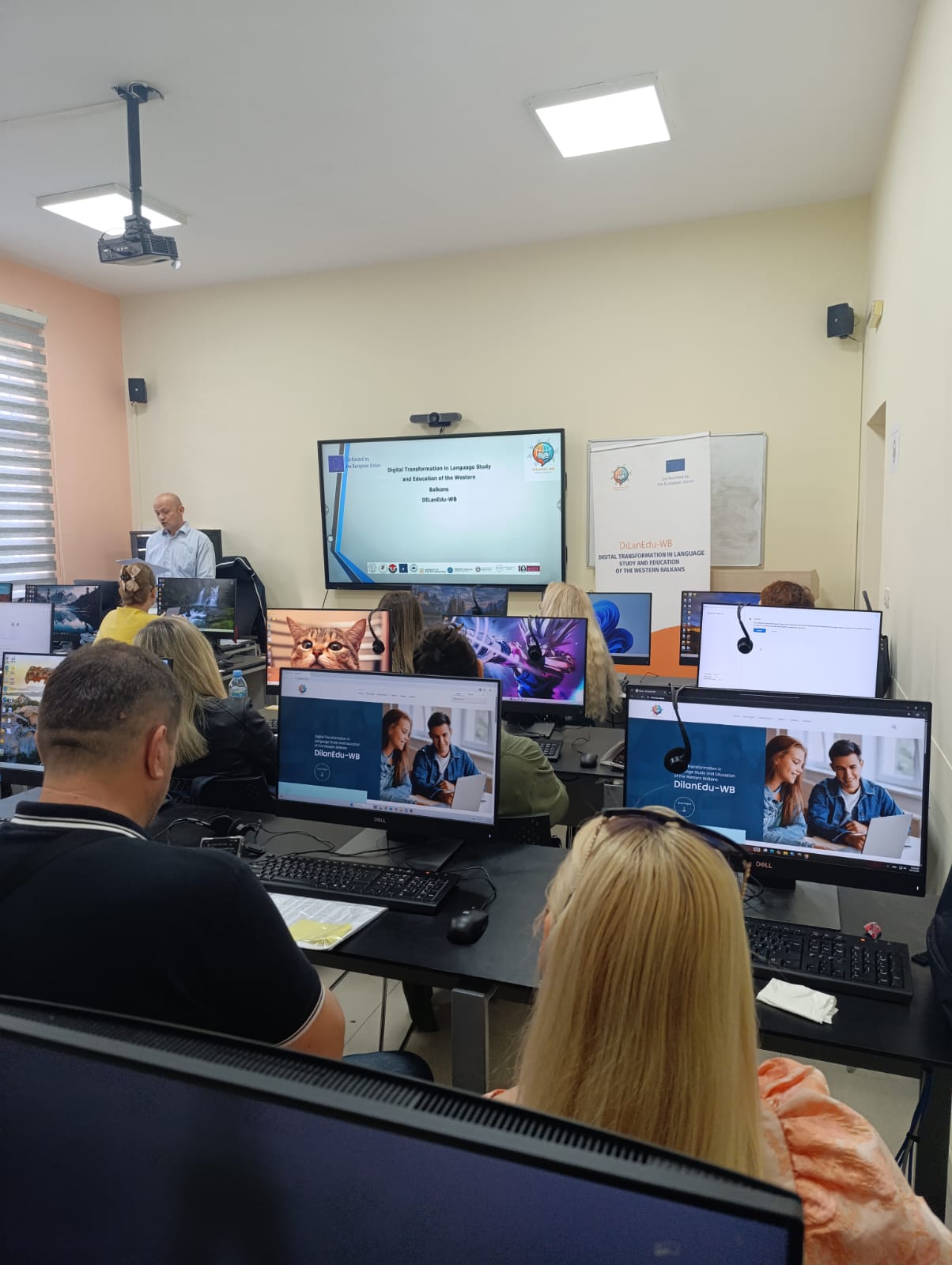
The training programmes attracted 36 registered participants, including academic staff, administrative staff, students, researchers, and language professionals. Twenty participants successfully completed both training modules and were awarded certificates recognising the competences acquired through the micro-credential programmes. The diversity of participants created an interactive learning environment that encouraged collaboration, knowledge exchange, and interdisciplinary dialogue.
The programmes were delivered in the Translation Laboratory of the Faculty of Foreign Languages, making full use of the University’s digital infrastructure and demonstrating the successful integration of technology-enhanced learning into higher education. The practical nature of the training enabled participants to develop competencies that are directly applicable to both academic and professional translation contexts.
Participant feedback confirmed a high level of satisfaction with the quality of the training, the relevance of the learning materials, the practical laboratory sessions, and the expertise of the external trainer. The programmes also highlighted the growing importance of digital technologies and artificial intelligence in contemporary translation practice and language education.
The successful implementation of these micro-credential programmes represents an important milestone in the University’s ongoing efforts to modernise language education, promote innovative teaching methodologies, and strengthen digital competences among future translators, educators, and language professionals. The activity also contributes to the long-term sustainability of the DiLanEdu-WB project by supporting curriculum innovation and fostering the digital transformation of language education across higher education institutions in the Western Balkans.
Project: Erasmus+ Capacity Building in Higher Education (CBHE)
Project: DiLanEdu-WB – Digital Transformation in Language Study and Education of the Western Balkans
Work Package: WP2 – Curriculum Development